How TradingView Charts Reveal the Gap Between Planning and Doing
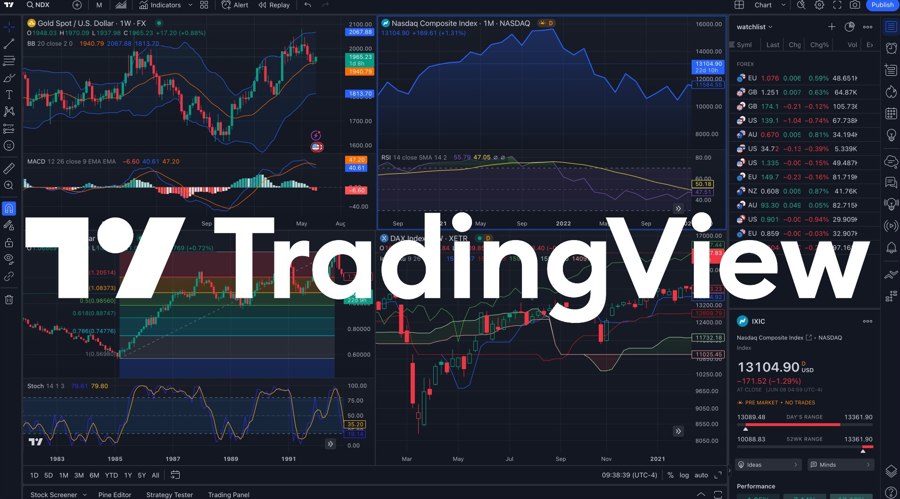
Planning feels like trading without the consequences, and that absence of consequences is precisely what makes plans feel more solid than they turn out to be. During the preparation phase, when markets are closed and price is static on the screen, analytical thinking operates without interference from the emotional activation that live market conditions produce. The trader identifies the setup, marks the entry trigger, defines the stop level, and sets a realistic target. Everything looks coherent. The logic holds. The risk is defined and acceptable. Then the market opens and conditions develop in a way that is close to but not exactly what was anticipated. The carefully constructed plan begins to encounter the reality it was designed to navigate.
The gap between planning and doing in trading is not primarily a knowledge gap. Traders who underperform their own plans generally understand what they intended to do and why. The gap is an execution gap, produced by the difference between how cognitive and emotional processes function during calm preparation versus how they function under the time pressure and financial stakes of a live session. Decisions that require seconds during preparation can become laborious during execution. Levels that seemed clearly defined on a static chart become ambiguous when price is moving around them in real time. The confidence gained in the analysis can be lost as soon as adverse movement becomes evident.
When reviewing TradingView charts after sessions in which they didn’t behave as planned, the trader can see the precise moments when they did not behave as planned and what structural indicators the chart showed at that time. A trader who planned to enter on a confirmed breakout but instead entered early, before confirmation arrived, can see exactly where that premature entry occurred relative to the level they had identified. The chart preserves the evidence of both the plan and the deviation in a way that memory rarely does faithfully. Memory tends to rationalize execution decisions after the fact in ways that obscure the gap rather than clarify it.
Identifying where the gap consistently appears is more useful than identifying that it exists. Some traders discover they reliably exit winning trades too early, abandoning positions that were developing correctly because short-term retracement created concern that the move was over. Others find they hold losing trades too long, waiting for a return to entry price that the chart’s structure clearly does not support. Still others discover that their entries are consistently late, occurring after confirmation that the move has already extended beyond the ideal entry point. Each of these patterns represents a specific, correctable execution tendency rather than a general failure of discipline.
Bridging the gap requires making the plan more explicit before the session begins rather than simply trying harder to follow it during the session. Vague plans produce vague execution because they leave room for interpretation, and under pressure that interpretation defaults to whatever feels least uncomfortable in the moment. A plan that specifies the exact conditions required for entry, the precise level at which the stop is placed, and the specific structural target for the exit leaves far less room for emotional override because each decision has already been made during the calmer preparation phase.
What consistent post-session TradingView charts review ultimately produces is an increasingly accurate self-model that traders can use to design execution frameworks that work with their actual tendencies rather than against them. That self-model is built from evidence rather than aspiration, which makes it far more reliable as a foundation for behavioral change than the generic discipline advice that trading literature typically offers.