The Truth About Learning Salsa in Orange County (Why Steps Aren’t Enough)
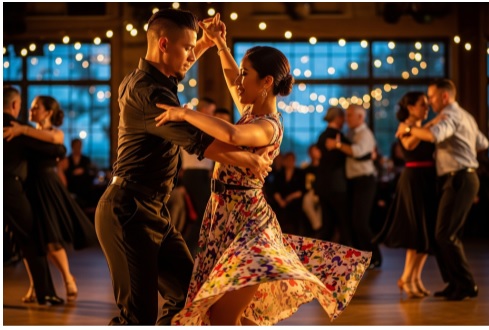
Did you know that over 200 million people like salsa dancing around the world? It is one of the fast-paced social dances that can help you burn 300-400 calories within one hour. Considering its popularity and health benefits, many adults sign up for salsa dance classes in Orange County. But despite the excitement, many beginners quickly notice something surprising – knowing the steps is not enough to make them feel like dancers.
The truth is simple, but often overlooked — salsa is not just a step-based dance; it is a communication skill set built on rhythm, connection and musical awareness. That is why many students find salsa difficult and often feel slower than expected.
Why do most beginners focus on steps (And why is it not enough)?
When people sign up for dance classes in Orange County, they focus on learning a sequence of movement only – forward, back, turn, cross-body leads, and spins. While these steps are important, they are only the basics.
For a pro at salsa, you need to go far beyond memorizing patterns and start developing control, awareness, and adaptability in real time. Advanced-level salsa is less about what step comes next and more about how you execute, connect, and respond in the moment.
A dancer who just focuses on steps often struggles, especially when:
- The timing feels slightly different in music
- A partner leads or follows unexpectedly
- The social dance floor is crowded or fast-paced
This is why many students feel confident in class but nervous at social events. A skilled salsa dancer focuses on timing precision and musical interpretation – they don’t just count beats. Instead, they feel the structure of music and adjust their movements accordingly.
Salsa is a Conversation, Not a Routine
A skilled salsa dancer pays attention to partner connection. In advanced salsa, leading and following become a silent conversation. So, the leaders don’t force movements. Instead, they suggest direction through subtle body signals. On the other hand, the followers don’t just repeat patterns; they interpret intention, maintain balance and add personal styling before breaking connection.
And for this type of interaction, there must be:
- Awareness of partner movement
- Sensitivity to timing changes
- Ability to adjust mid-pattern
- Trust and responsiveness between dancers
These are the factors that make social dancers different from experienced ones.
Lack of focus on Music
Many beginners just focus on counting steps. However, salsa is not just staying on 1-2-3 or 5-6-7. Instead, salsa is built on a rich, layered rhythm created by multiple musical instruments – congas, timbales, piano, and bass. And understanding these layers is the only way to become naturally more expressive during the dance.
So, before dancing, you have to learn how to:
- Hear the beat beyond counting
- Identify rhythm breaks and accents
- Adjust movement intensity with music
- Dance with the flow
The only key to developing your musicality skills is repetition and exposure. The more you hear salsa music and dance to different salsa songs and tempos, the more you will familiarize yourself with the music.
Clean Steps Alone Are Not Sufficient
Many beginners feel confident once they learn the steps. However, confidence in salsa comes less from technical accuracy and more from feeling comfortable in real situations. So, you need to feel relaxed on the dance floor. And the best way to do so is to attend socials.
Note: True confidence comes from repetition, exposure and experience – not perfection.
Structured Learning – The Real Secret to Learning Salsa Successfully
Enrolling yourself in a dance class in Orange County that believes in structured learning is the best way to learn salsa. Structured learning is a step-by-step way of learning where each skill builds on the previous one.
In salsa learning, you should follow the steps below:
- Basic step patterns and timing
- Partner connection and lead/follow technique
- Musicality and rhythm training
- Social dance application
This helps ensure:
- You don’t feel lost or overwhelmed
- Skills build properly over time
- You improve faster and more consistently
Some dance studios focus on repetition-based learning, whereas others focus on pattern-heavy choreography. While both approaches have value, repetition-based learning often helps students develop stronger muscle memory and better adaptability on the dance floor. So, make sure you choose your dance lessons in Orange County carefully.
The Bottom Line
Learning salsa is exciting, but learning the steps is just the beginning. You have to focus on developing music awareness, partner connection, and social confidence.
And when you master all the steps, no one can stop you from becoming a confident salsa master. In addition, remember that progress in salsa does not come from perfection—it comes from consistency. So, practice beyond the classroom, focus on connection over perfection, and stay consistent with social dancing exposure.