Choosing the Right Boat Lift for Florida’s Waterways: What Every Boater Should Know
Florida’s boating culture is unmatched in the country. With thousands of miles of navigable waterways, year-round boating weather, and some of the most diverse coastal and inland water environments in the nation, Florida is home to more registered boats than any other state. Protecting those vessels from the conditions that make Florida boating so appealing — saltwater exposure, biofouling, tidal fluctuation, and storm weather — starts with the right boat lift.
A quality boat lift keeps a vessel out of the water when it isn’t in use, dramatically extending hull life, reducing maintenance costs, and protecting the boat from the corrosion, barnacle growth, and waterline damage that result from constant immersion. Understanding the options available and the factors that affect selection is the first step toward making the right investment.
Types of Boat Lifts Available in Florida
The Florida marine market supports a wide range of lift configurations, each suited to different vessel types, dock arrangements, and water depths.
Vertical four-post lifts are the most common residential configuration. Four posts are driven into the waterway bottom; the boat sits in a cradle suspended between them by cables and a lifting mechanism, typically electric motor-driven. These lifts are reliable, straightforward to operate, and available in a broad range of weight capacities — from small powerboats to large cruisers.
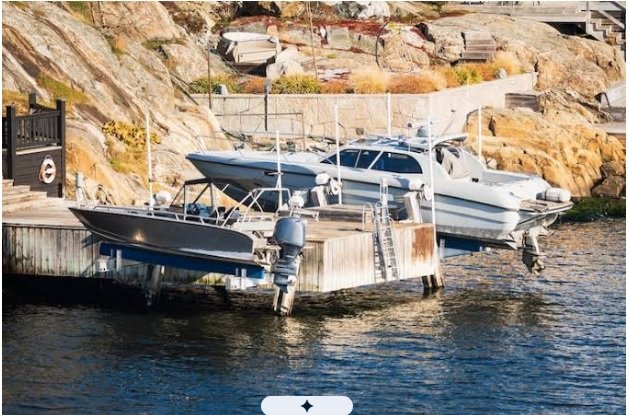
Hydraulic boat lifts use hydraulic cylinders rather than cables to raise and lower the vessel. They are particularly popular for larger boats and offer smooth, controlled operation with minimal mechanical complexity above the waterline. Hydraulic systems require less maintenance than cable systems in many applications.
Floating boat lifts are used in areas where bottom conditions or water depth make pile-driven lifts impractical. They use air-filled bladder systems or pontoon-based platforms to suspend the vessel. Floating lifts are portable and require no in-water construction, making them suitable for applications where permitted structures are restricted.
Elevator or cradle lifts are used for PWC (personal watercraft) and smaller boats, providing compact, efficient storage in configurations that can be mounted directly to an existing dock.
Key Selection Factors
Choosing the right boat lift florida boaters rely on requires evaluating several factors specific to the vessel, the site, and the owner’s operational preferences.
Weight capacity is the non-negotiable starting point. A lift must be rated for the total weight of the vessel plus fuel, gear, and water in livewells. Undersized lifts suffer premature mechanical wear and create safety risks. Most installers recommend a capacity margin of at least 10–20% above the boat’s loaded weight.
Water depth affects which lift configurations are feasible. Minimum water depth requirements vary by lift type and by the boat’s draft. Tidal variation adds complexity in coastal locations where water level can fluctuate significantly between high and low tide.
Dock configuration determines how the lift is positioned and accessed. Freestanding lifts mounted independently in the water alongside a dock have different structural and permitting implications than lifts integrated with the dock structure itself.
Drive-in vs. float-in access affects usability. Cradle geometry, guide post placement, and dock height all influence how easily the operator can position the vessel on the lift — a detail that matters every time the boat is used.
Saltwater Considerations
Florida’s saltwater and brackish water environments impose demands on lift materials and hardware that freshwater installations do not face. Aluminum cradles, stainless steel hardware, and corrosion-inhibited drive components are standard requirements in coastal Florida applications. Lifts specified without appropriate material considerations for saltwater exposure will require significantly more maintenance and have shortened service life.
Routine maintenance — flushing motors and winches with fresh water, lubricating moving parts, inspecting cables and cradle bunks — extends equipment life considerably and is a standard part of responsible lift ownership in a marine environment.
Permitting Requirements in Florida
Boat lift installation requires permits from the Florida Department of Environmental Protection and, in navigable waters, coordination with the Army Corps of Engineers. Local county and municipality requirements add additional layers in many areas. Working with an experienced marine contractor who is familiar with the permitting process in specific Florida counties is important — both for compliance and for avoiding costly delays or required modifications after installation.
Protecting the Investment
A boat that spends its off-time on a quality lift arrives at the water cleaner, performs better, and holds its value more effectively than one kept in the water full-time. For Florida boat owners who want to protect that investment across years of use, a properly specified and installed lift is one of the most effective tools available.