A Practical Look at Connectivity and Lifestyle Around Singapore Homes
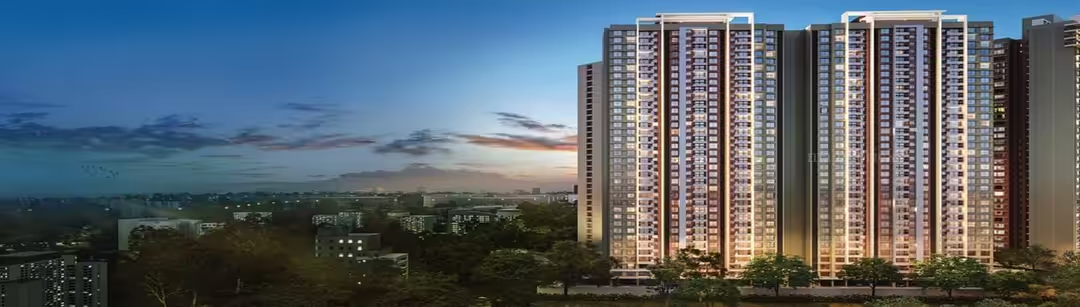
Choosing a home in Singapore involves understanding more than the building itself. A residential property is part of a larger neighbourhood, and that neighbourhood can shape how residents commute, shop, dine, attend school, access services, and spend their leisure time. For this reason, prospective homeowners can benefit from considering both the property and its surrounding environment when researching Dorset Gardens and Clovelle of Woodlands.
The priorities of each household will naturally be different. A professional may be primarily interested in public transport and commuting routes. A family may need to consider schools, childcare, parks, and bedroom arrangements. Other residents may place greater importance on shopping, dining, healthcare, recreation, or access to community facilities. Identifying these priorities can make the research process more focused.
Starting With the Neighbourhood
A residential development is connected to the surrounding neighbourhood through roads, MRT stations, bus routes, commercial areas, schools, and recreational facilities.
Dorset Gardens is associated with Farrer Park, a city-fringe neighbourhood with established urban amenities and public transport connections. Clovelle of Woodlands is planned within Woodlands, an established northern town with a broad range of residential, commercial, community, and transport facilities.
Looking at the wider environment can provide useful context when considering how a potential home may fit into everyday routines.
The Farrer Park Environment
Farrer Park has an established urban setting where residential communities are located alongside shopping, dining, healthcare, cultural, and transportation facilities.
For people researching Dorset Gardens, Farrer Park MRT Station is an important part of the local transportation network. The station is served by the North-East Line, providing connections to other areas of Singapore.
The surrounding area also offers several established retail destinations. City Square Mall provides shopping and dining facilities, while Mustafa Centre offers a broad range of products and services. Little India is nearby and provides restaurants, shops, cultural attractions, and local businesses.
Prospective residents can explore these facilities to understand the broader environment associated with the Farrer Park area.
The Woodlands Environment
Woodlands offers a different residential setting from the city-fringe environment of Farrer Park. It is an established northern town with infrastructure supporting housing, education, healthcare, shopping, transportation, and recreation.
Clovelle of Woodlands is planned along Woodlands Drive 17. Buyers can consider the development as part of the wider Woodlands town and examine how nearby facilities may fit into their regular activities.
Woodlands South MRT provides access to the Thomson-East Coast Line, while Woodlands MRT connects with the North-South Line.
The town also includes shopping destinations such as Causeway Point, Vista Point, and 888 Plaza. These locations provide options for groceries, retail shopping, dining, and everyday services.
Looking Closely at Commuting
Daily travel can be one of the most important practical considerations when choosing a home. Instead of simply checking whether an MRT station is nearby, buyers can examine the complete journey to their most frequent destinations.
For Dorset Gardens, prospective residents can investigate routes from Farrer Park MRT to their workplaces, schools, or other locations they visit regularly.
For Clovelle of Woodlands, buyers can explore journeys using Woodlands South MRT and Woodlands MRT.
A complete journey may involve walking, buses, transfers, and peak-hour travel. These elements can influence the practical experience of commuting.
A useful research method is to make a list of frequently visited destinations and check the door-to-door route from the potential home. This can help buyers understand how transportation fits into their actual weekly routine.
Shopping and Everyday Errands
Shopping facilities are another important part of neighbourhood convenience. Residents regularly need groceries, household supplies, personal products, and other essentials.
The surroundings of Dorset Gardens provide access to the established retail environment around Farrer Park and Little India, including larger shopping destinations and local businesses.
The wider Woodlands environment surrounding Clovelle of Woodlands also includes established shopping centres and neighbourhood facilities.
Different households may have different shopping preferences. Some people prefer large malls where they can combine retail, dining, and services in a single visit. Others may prefer supermarkets and smaller stores for quick everyday purchases.
Considering personal shopping habits can help buyers determine which facilities are most relevant.
Dining and Food Options
Restaurants and food outlets can also influence how residents experience a neighbourhood. Dining options may be useful for everyday meals, family occasions, weekend outings, and social gatherings.
The Farrer Park and Little India surroundings associated with Dorset Gardens provide access to a varied food environment.
The wider Woodlands area around Clovelle of Woodlands also includes restaurants and food outlets across shopping centres and neighbourhood areas.
The importance of these facilities depends on lifestyle. People who regularly eat outside may pay close attention to restaurant access, while households that prepare most meals at home may focus more on supermarkets and grocery facilities.
Education and Childcare
Families often have additional requirements when considering a residential property. Schools, childcare, healthcare, transportation, and recreational facilities can all influence household planning.
Those researching Dorset Gardens and Clovelle of Woodlands can investigate schools and childcare facilities in their respective surrounding areas. Current admission policies, registration procedures, and eligibility requirements should be checked independently before relying on proximity when making education plans.
The route between home and school can also be important. Walking paths, road crossings, buses, and journey times can influence a child’s daily schedule.
Families can also consider how the home itself supports study and family activities. Bedroom configurations, storage areas, and flexible spaces can become increasingly useful as household needs develop.
Examining the Home Layout
The floor plan can affect how comfortably residents use their available space. Bedrooms, living areas, storage, dining spaces, and flexible rooms can all have different roles.
When researching Dorset Gardens, prospective buyers can review available layouts and consider how each space could support their household activities.
For Clovelle of Woodlands, the planned three-, four-, and five-bedroom configurations provide different options for households with varying requirements.
A spare room can potentially have several uses. It may become a study, home office, nursery, guest room, or storage space depending on household circumstances.
Thinking about multiple uses can help buyers understand whether a floor plan provides enough flexibility for their lifestyle.
Recreation and Leisure
Residential convenience also includes opportunities to relax and spend time outside work and household responsibilities.
Woodlands includes destinations such as Woodlands Waterfront, offering an outdoor environment within the broader town.
The Farrer Park environment associated with Dorset Gardens provides access to cultural attractions, shopping, dining, and recreational destinations.
Lifestyle preferences will determine which facilities are most important. Families may focus on parks and outdoor spaces, while other residents may prefer fitness facilities, restaurants, entertainment venues, or cultural attractions.
Understanding these preferences can help households identify the neighbourhood features they should research more closely.
Considering Future Space Requirements
Household needs can change over time. Children may grow, work arrangements can evolve, and residents may begin spending more time working or studying from home.
When researching Dorset Gardens, buyers can consider whether available spaces can accommodate different activities if household requirements change.
For Clovelle of Woodlands, the different bedroom configurations can be examined according to current household requirements and possible future uses.
This does not require predicting exactly what a household will need years from now. Instead, it encourages buyers to consider whether a home offers reasonable flexibility.
Experiencing the Location Personally
Online research is helpful for understanding a property’s general surroundings, but visiting the neighbourhood can provide additional insight.
Prospective buyers can visit at different times of day to observe traffic, noise, pedestrian activity, nearby businesses, and public transport conditions.
Exploring the surroundings of Dorset Gardens can provide a direct impression of the Farrer Park environment. Visiting Clovelle of Woodlands and the surrounding Woodlands Drive 17 area can similarly help buyers understand the local setting.
A physical visit can then be combined with research into transport routes, schools, shopping facilities, floor plans, and household finances.
Building a Useful Research Checklist
A personal checklist can make property research easier to organise. Buyers can focus on the factors that directly affect their household rather than trying to evaluate every possible feature.
A checklist may include:
- Daily commuting routes
- MRT and bus connections
- Grocery and shopping facilities
- Dining options
- Schools and childcare
- Healthcare access
- Parks and recreation
- Bedroom requirements
- Storage requirements
- Flexible living areas
- Potential future needs
For Dorset Gardens, these categories can be considered within the Farrer Park environment and its established urban amenities.
For Clovelle of Woodlands, the same categories can be applied to Woodlands, including its transportation network, shopping destinations, community facilities, and planned residential configurations.
Using a consistent framework can make it easier to identify information that requires further investigation.
Conclusion
Understanding a residential property involves examining both the home and the neighbourhood around it. Transportation, shopping, dining, education, healthcare, recreation, and interior space can all influence how residents organise their daily lives.
Dorset Gardens is associated with the city-fringe setting of Farrer Park, where established urban amenities and public transportation connections form part of the wider environment. Clovelle of Woodlands is planned within the mature Woodlands town, where established transport links, shopping destinations, community facilities, and recreational opportunities contribute to the surrounding setting.
Prospective homeowners can relate these characteristics to their own household requirements. Commuting patterns, family needs, shopping habits, dining preferences, leisure activities, and future space requirements can all be considered as part of a structured property search.
By looking beyond the building and examining the wider neighbourhood, buyers can develop a more complete understanding of the residential environment. A practical approach that combines location research, transport planning, amenity checks, floor-plan review, and personal priorities can provide a useful foundation for continuing the search for a suitable home in Singapore.