Two Tables, Same Photo, Very Different Insides: What Really Decides Hydraulic and Electric OT Table Price
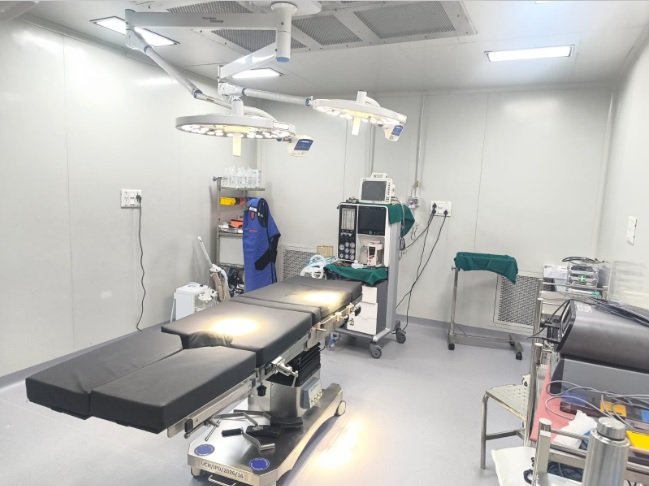
Put two quotations side by side and the tables look identical.
Same silhouette. Same stainless finish. Same list of movements. One costs noticeably less, and the obvious conclusion is that somebody is overcharging.
Sometimes that’s true. Usually it isn’t.
Because almost everything that moves the hydraulic OT table price sits inside the column, under the tabletop, or in the paperwork — none of which shows up in a product photograph.
Start with the drive system
This is the biggest single variable, and it’s the one buyers understand best.
A hydraulic table runs off a foot pump. No mains dependency, no actuator, no control board. Very little inside it that can fail. That mechanical simplicity is why the ot table hydraulic price generally sits below a motorised equivalent — you’re paying for fewer components, not for lower quality.
Go motorised and the electric OT table price reflects actuators, a control board, a handheld remote, and — if the manufacturer is serious — a battery backup and manual override built in as standard rather than sold as an add-on. If a quotation for an ot table electric configuration looks unusually low, check whether backup is included. That’s very often where the difference is hiding.
Then there’s the electro hydraulic OT table, which uses electronic control on top of a hydraulic lifting column. Two systems instead of one, which is why it sits at the top of the range — and why most modern multi-speciality theatres end up there anyway.
What the steel actually is
“Stainless steel” on a quotation means very little on its own.
Medical grade SS 304, rust-proof and properly finished, costs more than an unspecified grade and behaves differently over fifteen years of cleaning cycles. Add an anti-bacterial coating in line with NABH guidelines and the figure moves again. Ventek uses SS 304 with the VentekSafe coating across its tables, which is a specification worth asking every supplier to state in writing rather than assume.
Weld quality along the base is the other invisible cost. You can often see it if you look. Most people don’t.
The tabletop and the C-arm
Radiolucency is expensive, and skipping it is one of the quickest ways to make a quotation look competitive.
A 13 mm methoxy methyl melamine tabletop giving C-arm filtration of ≤1mmAL, with unrestricted access along the table length, costs more than a basic top. If your theatre images during surgery, that difference isn’t optional — it’s the whole point of the table. And it’s worth verifying against the C-arm you actually own, in the room it’ll actually stand in.
Hospitals discover clearance problems mid-case. Every single time it was avoidable at the quotation stage.
Load rating, and how it was tested
A table advertised at 250 kg should have been tested at 250 kg, repeatedly, through a full range of movement.
Not certified against a bench figure that quietly assumed something lighter and static. Weak actuators and undersized columns don’t fail on day one — they drift under heavy patients somewhere around year three, which surgeons notice long before procurement does.
Ventek tables carry a 50 to 250 kg range with a centre-of-gravity design built for weight balancing, and every unit clears a 48-hour non-stop failure check plus temperature and voltage fluctuation testing before it leaves the plant. That testing costs money. It also explains part of the gap between two tables that photograph the same.
Attachments — the line item people cut first
And then regret.
An ot table electro hydraulic with attachments is a genuinely different machine from the same table sold bare. Shoulder supports, arm boards, anaesthesia screen, kidney bridge, leg holders, spinal frame, orthopaedic traction — each one unlocks a procedure your department can bill for.
Cut them to bring the quotation down and you’ll find out about six months later that the gynaec or ortho team can’t run a list somebody promised them. Then you’re raising a second purchase order for parts that should have been on the first one, at a price nobody negotiated.
Some of this can be designed around. The Amaze 5001 uses interchangeable head and leg sections so one table covers more positions without a second buy. But the general rule holds: specify attachments before signing, not after.
Warranty, spares and the ten-year question
Two more things sit quietly inside the figure.
Warranty length and what it actually covers — labour, parts, travel, or some subset. And whether spares will still exist for this model in a decade, which is the question that separates a factory from a trading house. Ask it directly and listen to how fast the answer comes.
So how do you compare
Ask every supplier to quote the same specification: steel grade, coating standard, tabletop material and filtration figure, tested load range, drive type with backup arrangement, full attachment list, warranty terms, spares commitment.
Do that and the quotations stop looking identical almost immediately.
Ventek Care Pvt. Ltd. has been building surgical tables in New Delhi for eighteen-plus years — 30,000+ installations, 1,150+ distributors, 27 countries, CDSCO registered, US FDA listed, ISO 13485 and GeM approved OEM. Their hydraulic, electric and electro hydraulic ranges, with full specifications, are on the OT table manufacturer in India page.
Send them your case mix and room dimensions and ask for a configuration built against it. A price quoted before anybody asks about your theatre is a price for inventory, not for your operating room.