Role of Anti-SHISA2 Antibody in Prostate Cancer Research
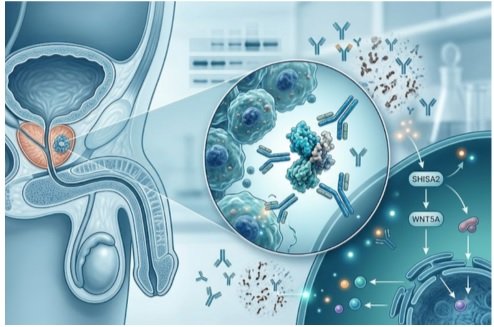
prostate is a small gland in the male reproductive system. It is located below the bladder and in front of the rectum. The urethra passes urine and semen out of the body through the prostate.
It is responsible for producing prostate fluid that forms part of semen. It helps create the environment that allows sperm to survive and move effectively. In addition, it helps regulate the flow of urine from the bladder. It also contributes to ejaculation.
The prostate contains different types of cells that can undergo genetic and molecular changes. When abnormal cells begin to grow uncontrollably, prostate cancer can develop. That is why researchers usually study proteins, such as SHISA2, expressed by prostate cells. This provides them with valuable insights about prostate cancer, which further help them develop better therapies and treatments.
What is SHISA2?
SHISA2, or shisa family member 2, is a protein-coding gene that encodes a protein involved in cellular signaling. The human SHISA2 gene is officially recognized by the National Center for Biotechnology Information (NCBI). It is classified as a protein-coding gene.
It has been found that SHISA2 is an overexpressed gene in high-grade prostate cancer. That is why researchers usually investigate SHISA2 at two different levels:
- SHISA2 gene expression: Measure SHISA2 RNA using qPCR.
- SHISA2 protein expression: Measure SHISA2 protein using the anti-SHISA2 antibody.
What is an Anti-SHISA2 Antibody?
An anti-SHISA2 antibody is produced to recognize a specific region, or epitope, of the SHISA2 protein. When the antibody encounters SHISA2 in a sample, it binds to the protein.
This binding can then be detected using an appropriate experimental method. Depending on how the antibody has been validated, researchers may use it for techniques such as:
- Western blotting – to detect and compare SHISA2 protein levels.
- Immunohistochemistry (IHC) – to examine SHISA2 expression and localization in tissue sections.
- Immunofluorescence (IF) – to visualize where SHISA2 is located within cells.
- Immunoprecipitation (IP) – to isolate SHISA2 and investigate proteins that may interact with it.
How Do Anti-SHISA2 Antibodies Help in Prostate Cancer Research?
Investigate SHISA2 and WNT5A Signaling
It has been found that SHISA2 enhances the aggressive phenotype in prostate cancer through the regulation of WNT5A expression. Since WNT signaling is involved in several cellular processes, including proliferation and tumor-associated behavior, researchers usually study the related signaling pathways.
They use anti-SHISA2 antibodies to investigate the relationship at the protein level. They can examine SHISA2 expression alongside WNT5A in cell or tissue samples and determine how protein abundance changes following experimental manipulation of SHISA2.
Study Prostate Cancer Cell Proliferation
Cancer cell proliferation is a central feature of tumor progression. Experimental manipulation of SHISA2 has provided evidence that the protein may influence prostate cancer cell growth.
Researchers can use anti-SHISA2 antibodies to confirm changes in SHISA2 protein following gene knockdown, overexpression, or other experimental interventions. They use different techniques, like WB, to determine whether an experimental treatment actually changes SHISA2 protein abundance.
They further combine SHISA2 protein analysis with cell viability and proliferation assays. This provides them with a better understanding of how this protein may contribute to prostate cancer biology.
Examine SHISA2 Expression in Prostate Cancer Tissues
Anti-SHISA2 antibodies can help researchers examine the distribution and abundance of SHISA2 protein in prostate cancer tissue samples. They use techniques like immunohistochemistry to identify SHISA2-positive cells and observe where the protein is expressed within the tissue.
Researchers can compare SHISA2 expression between normal prostate tissues and cancerous tissues. They can also compare samples from tumors with different pathological characteristics. These comparisons may help researchers understand whether changes in SHISA2 protein expression are associated with prostate cancer progression or aggressive disease.
Validate SHISA2 Protein Expression
Researchers can’t rely on the quantity of SHISA2 RNA alone to get a complete picture of protein expression. They need to validate whether changes observed at the gene-expression level are also reflected at the protein level. So, researchers use anti-SHISA2 antibodies.
For example, researchers may use Western blotting with an anti-SHISA2 antibody to determine the corresponding protein levels after performing qPCR to measure SHISA2 mRNA. This combination of RNA and protein analysis provides stronger evidence about how SHISA2 is regulated in prostate cancer cells.
Anti-SHISA2 antibodies can also be useful when evaluating the effects of gene knockdown, overexpression, or drug treatment on SHISA2 protein levels.
Explore SHISA2 as a Potential Research Biomarker
The reported overexpression of SHISA2 in high-grade prostate cancer makes it an interesting biomarker for prostate cancer research. Researchers can use anti-SHISA2 antibodies to investigate whether differences in SHISA2 protein expression are associated with tumor characteristics.
For example, tissue samples can be analyzed using immunohistochemistry to determine SHISA2 staining patterns. Researchers can then compare these findings with other experimental or pathological data to better understand the potential relationship between SHISA2 expression and prostate cancer progression.
The Bottom Line
Now that you know how anti-SHISA2 antibodies help in prostate cancer research, what are you waiting for? Find a reliable supplier to buy high-quality antibodies to support your experiment and get accurate and reproducible results.