How to Choose an Online Medical Assistant Program in Utah Without Getting Burned
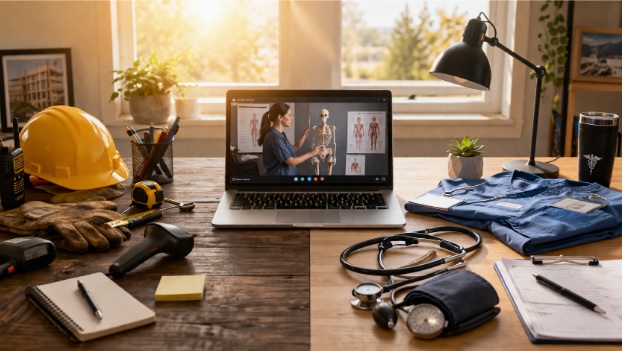
Changing careers in Utah is a very smart move right now. The local healthcare system is expanding rapidly around places like Salt Lake City and Provo. Because of this massive growth, doctors and clinic managers are constantly looking for reliable support staff. If you are tired of your current job and want better pay and normal working hours, becoming a medical assistant makes perfect sense.
But quitting your day job to commute to a campus just isn’t realistic for most people. You still have rent to pay and a family to take care of. Because of this, a lot of working adults look into accredited medical assistant programs online in Utah to get their foot in the door safely.
Learning from home gives you the freedom to balance your schedule without giving up your paycheck. But you have to be extremely careful. A lot of online schools are basically just expensive digital textbooks. They take your money, leave you alone to figure out the material, and hand you a certificate that local doctors do not respect.
If you want your investment to actually lead to a real job, you have to filter out the bad options. Here is exactly what a good program must offer before you even think about enrolling.
1. Demand Institutional Accreditation First
Do not look at the class schedule or the tuition costs until you know the school is fully accredited. This is the single most important thing you can check. Institutional accreditation means an independent group regularly audits the school. They verify that the instructors know what they are teaching and that the lessons meet actual healthcare standards.
If you choose a school without this approval, you take on all the risk. Most healthcare employers in Utah will simply throw your resume in the trash if your training came from an unaccredited program. Also, you cannot get federal financial aid like Pell Grants or student loans for an unaccredited school. Without that federal funding, you will be forced to pay for the entire program out of your own pocket.
2. Make Sure You Get Live Teachers
A lot of schools sell online classes that just give you a login to a dashboard full of old videos. That is a terrible way to learn complex material. Taking a class on the internet shouldn’t mean you are completely isolated and paying to teach yourself.
When you start learning complicated anatomy or how to process medical billing, you will inevitably have questions. If you do not have a live teacher to ask for help right then and there, you will get frustrated and quickly fall behind. Look for programs that require you to log into scheduled live lectures. That way, you get the convenience of staying home. But you still have a real person keeping you accountable and answering your questions.
3. Look for Guaranteed Clinical Placements
You absolutely cannot learn how to draw blood or take a patient’s vitals by reading a digital textbook. You need to physically practice these skills in a real medical setting. According to the U.S. Bureau of Labour Statistics, the medical assisting field is growing rapidly. But clinics only want to hire people who already know how to handle real patients safely.
A good school makes sure you get that hands-on practice. Ask the admissions team a very direct question. Do you place me in a local clinic, or do I have to track down a spot myself?
The best programs do the heavy networking for you. They use their local connections across Utah to place you in a clinic right near your house. They make sure you get your mandatory supervised hours without the stress of cold-calling hospitals on your own. Getting that physical experience before your first job interview builds your confidence. It proves you actually know what you are doing.
Conclusion
Going back to school is a massive commitment of your time, energy, and money. It’s easy to get caught up in the hype of a nice-looking webpage and pull the trigger too fast. But what you really need to look for on their site is their accreditation, whether they provide live instructors, and proof that they won’t leave you to find your own clinical hours. If an admissions rep cannot clearly promise those things, keep your money in your pocket and look somewhere else.