Role of Bevelling Machines in Boiler Manufacturing Processes
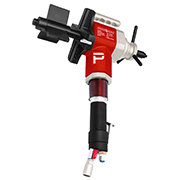
Successful boiler manufacturing depends on precise pipe and tube preparation because it serves as the foundation for all subsequent welding work. The weld may fail under excessive pressure when edge preparation does not meet the required standards. The bevelling machine becomes essential for this process. The machine creates precise pipe end cuts that match welding requirements by forming accurate angles.
This step requires more than simple workshop execution because it works as a controlled process. The bevelling machine delivers dependable results in both boiler erection sites and fabrication shops because it offers better speed and accuracy than manual grinding.
Importance of Pipe Preparation in Boilers
Boilers operate under extreme conditions, which combine high temperature with continuous pressure cycles. These extreme operating conditions create a need for strong and dependable weld joints.
The welding process requires pipes to undergo the following steps:
- Pipe length is cut to the required specifications
- Pipe surface is checked for flatness through the facing process
- Welding preparation begins with beveling
- Fit-up and alignment checks are carried out
The bevelling machine in boiler manufacturing delivers precise pipe-end machining, which produces clean and uniform results. This improves weld strength while reducing the chances of operational failure.
Working of Bevelling Machines in Boiler Tube Fabrication
Boiler systems rely heavily on tubes, which connect components like water walls, economizers, and superheaters. Each tube requires precise end preparation before welding begins.
In boiler tube work, the bevelling machine is used through two main methods:
- Internal Clamping System (For Boiler Tubes)
This system is commonly used for boiler tube applications in restricted working areas.
- The machine is inserted inside the tube
- It expands using a mandrel or collet system
- The system locks firmly for machining operations
- The internal cutting tool rotates to create the bevel
Key advantage: It provides a stable setup in tight spaces for accurate machining of small-diameter tubes.
- External Clamping System (For Larger Pipes)
This system is used for headers and thick-walled pipes.
- The machine clamps around the outer diameter
- It rotates externally around the pipe
- Cutting and beveling are performed in one setup
Key advantage: It works effectively for boiler headers and main-line pipes that require handling heavy-duty sections.
Step-by-Step Beveling Process
The actual boiler fabrication process is carried out under controlled conditions to ensure repeatable accuracy.
- The machine is mounted on the pipe or tube
- Required bevel angle is set (commonly 30°–37.5° depending on welding standards)
- The cutting tool rotates around the pipe surface
- Material is removed evenly to form a smooth bevel
- Facing operation creates a flat surface for proper fit-up
This process produces uniform geometry that manual grinding methods cannot achieve.
Applications in Boiler Manufacturing
Bevelling machines are used in multiple stages of boiler production and maintenance activities:
- Tubes for water wall panel preparation
- Finishing of superheater and economizer tube ends
- Piping work for boiler drums and headers
- Heat exchanger tube fabrication
- Repair work during maintenance shutdowns
Technicians often perform this work in tight boiler spaces during shutdowns, using portable machines to ensure quick, accurate machining.
How Beveling Machines Improve Weld Quality
Weld quality depends heavily on proper joint preparation. Poorly prepared edges often lead to weak joints and defects.
Proper beveling ensures:
- Better weld penetration
- Reduced porosity and slag inclusion
- Correct pipe alignment during fit-up
- Lower chances of weld rework during inspection
This improves boiler safety and reduces both operational and maintenance-related issues.
Conclusion
The production of secure boiler systems depends on accurate pipe preparation. The bevelling machine ensures accurate and repeatable edge preparation in both workshop and field conditions, resulting in improved welding quality through consistent edge preparation. Together with boiler tube expanders, which provide strong mechanical sealing between tubes and tube sheet areas, the overall system achieves higher reliability and better performance in high-pressure boiler applications.